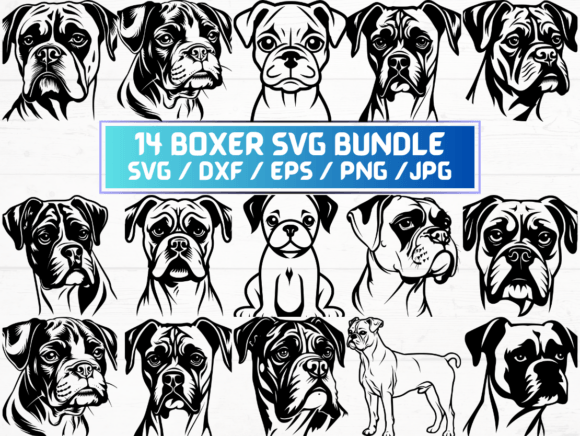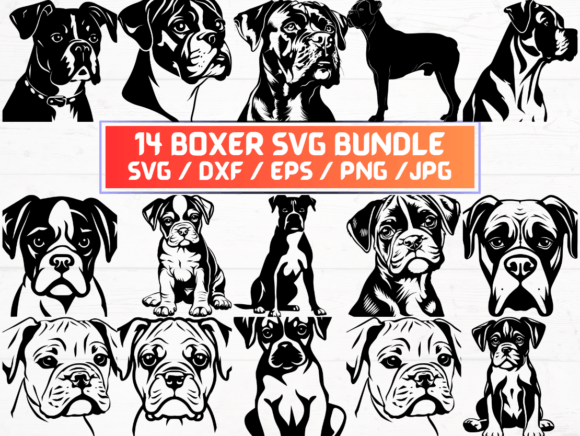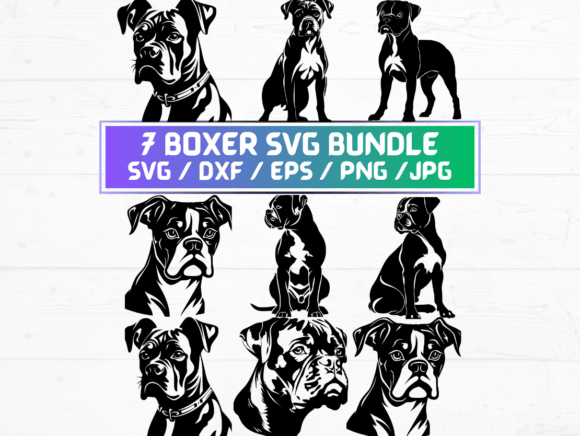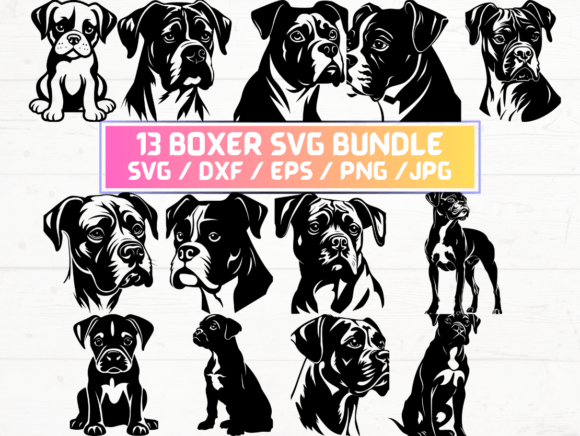
Boxer Dog SVG, DXF, EPS, JPG, PNG
A Designer’s First Glance: Bold, Friendly, and Ready for Stitching
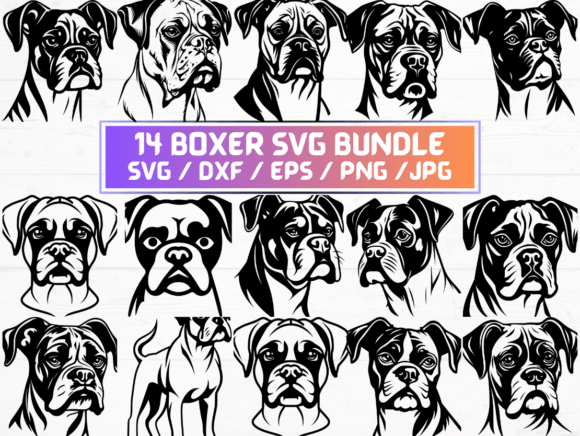
Opening the ZIP folder for Boxer Dog SVG, DXF, EPS, JPG, PNG, I immediately noticed the clean file organization—14 of each format, all named consistently. As someone who’s prepped hundreds of embroidery files for real-world production, I appreciate that upfront clarity. The boxer itself has that unmistakable charm: upright ears, expressive eyes, and a compact silhouette that reads well at small scales. It’s not overly detailed—no tiny wrinkles or complex shading—so it avoids common pitfalls like stitch crowding or thread breaks. That makes it ideal for a machine embroidery design meant for quick turnaround on custom apparel, baby items, or boutique merchandise.
Real Project Test: Embroidering a Personalized Tote Bag for a Local Dog Rescue
Last week, I used the Boxer Dog SVG, DXF, EPS, JPG, PNG to create embroidered tote bags for a fundraiser. We chose natural canvas—medium weight, slightly textured—and stitched the design centered on the front panel. The outline held up beautifully in satin stitch, and the fill areas stayed crisp without excessive density. Because the shape is solid and symmetrical, it hooped cleanly in a 4” x 4” hoop—no repositioning needed. Customers loved how recognizable it was at a glance: friendly but confident, playful but polished. That balance matters when your handmade product doubles as brand reinforcement for a cause.
Where This Design Shines (and Where It Needs Care)
The Boxer Dog SVG, DXF, EPS, JPG, PNG works especially well for:
- Custom apparel: Sweatshirt embroidery and t-shirts—especially on crewnecks or pocket placements—where boldness reads from across a room.
- Baby embroidery: On onesies or burp cloths, its simplified form avoids delicate details that might snag or irritate sensitive skin.
- Embroidered patch prep: The clean edges translate smoothly into iron-on or sew-on patches for caps, jackets, or backpacks.
- Holiday embroidery and personalized gifts: Think “Bark & Joy” Christmas stockings or “My Boxer’s Name” kitchen towels—this design anchors the theme without overwhelming text.
- Craft business consistency: Whether you’re an Etsy seller listing digital embroidery files or a small shop owner branding aprons and tea towels, this design holds visual weight across materials.
But be thoughtful with placement and fabric choice. On stretchy fabric like knits or ribbed cotton, use cutaway stabilizer and reduce stitch speed—those rounded ears and jawline can distort if tension isn’t dialed in. Avoid cramming it onto curved surfaces like cap fronts unless you’ve tested the layout first; the proportions shift subtly under tension. And while the design avoids fine linework, don’t push it below 3” wide on tiny lettering-adjacent projects—small corners (like the inner ear) may lose definition on dense weaves or dark fabric without contrast testing.
Design Assets That Build Trust—Not Just Decoration
What sets the Boxer Dog SVG, DXF, EPS, JPG, PNG apart isn’t just versatility—it’s how it supports professionalism in your workflow. The inclusion of both vector (SVG, EPS, DXF) and high-res raster (PNG, JPG) files means you can scale for print mockups, digitize confidently, or drop directly into embroidery software without pixelation. That’s critical when you’re building a digital embroidery file library for clients or preparing printable mockups for your Etsy listings. Buyers notice when a dog’s expression stays clear at 2” wide—and when your finished product looks intentional, not improvised.
It also elevates giftability. A customer ordering a personalized sweatshirt isn’t just buying fabric—they’re buying recognition, affection, identity. This boxer carries warmth without cartoonish exaggeration, making it appropriate for adults and kids alike. That emotional resonance translates directly into repeat orders and word-of-mouth referrals—especially among pet lovers who value authenticity over flash.
Practical Embroidery Designer Notes Before You Stitch
Before committing to a client project or bulk run, here’s what I always do with a new embroidery file like this one:
- Test on scrap fabric first—same weight and weave as your final piece—to check how satin stitch wraps corners and how fill areas settle.
- Review stitch density in your embroidery software. If it feels heavy for lightweight fabric, adjust underlay or reduce fill angle.
- Confirm hoop size compatibility. This design fits comfortably in standard 4” hoops, but verify before hooping expensive garments.
- Inspect small details like eye shape and muzzle line—some formats render subtle curves differently.
- Test thread colors on both light and dark backgrounds. A warm tan thread pops on navy; charcoal gray reads cleanly on cream.
- Use proper stabilizer: medium-weight cutaway for knits, tear-away for stable wovens like denim or canvas.
- Check licensing before selling finished items or reselling the digital files—this listing doesn’t specify terms, so confirm with the seller if you plan commercial use.
Final Thought: A Reliable Workhorse for Craft Business Growth
The Boxer Dog SVG, DXF, EPS, JPG, PNG isn’t flashy—but it’s dependable. In my studio, dependable designs are the ones that ship on time, photograph well, and earn compliments from customers who say, “It looks even better than the listing.” That quiet confidence comes from smart simplicity: strong outlines, balanced negative space, and a personality that reads clearly whether stitched on a baby onesie or a boutique apron. For crafters, Etsy sellers, and small shop owners building a catalog of personalized gift options, this is less of a novelty graphic and more of a foundational design asset—one that supports growth without demanding constant troubleshooting. Use it thoughtfully, test intentionally, and let the boxer do what it does best: stand out, stay legible, and bring joy to every finished product.