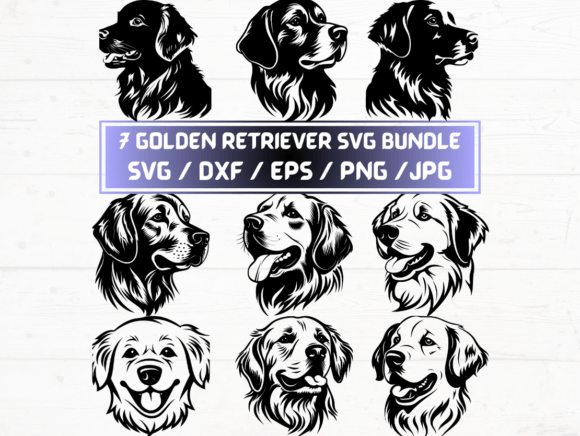
Golden Retriever SVG, DXF, EPS, JPG, PNG
A Designer’s First Look: Warm, Friendly — But Is It Embroidery-Ready?
When I opened the ZIP folder for Golden Retriever SVG, DXF, EPS, JPG, PNG, my first impression was immediate: this isn’t a cartoonish or overly stylized pup—it’s soft, approachable, and quietly confident. The outline is clean but not rigid; the ear curve flows naturally, the muzzle has gentle definition, and the eyes carry just enough detail to read as kind—not generic. As a designer who’s stitched hundreds of pet portraits for Etsy sellers and boutique baby brands, that balance matters. Too much detail becomes muddy in satin stitch; too little feels flat on a finished sweatshirt or pillow cover. This one lands right in the sweet spot for a machine embroidery design meant to feel handmade, not mass-produced.
Real Project Test: A Custom Embroidered Tote for a Dog-Lover’s Pop-Up Shop
Last week, I used the Golden Retriever SVG, DXF, EPS, JPG, PNG to create a limited-run tote bag for a local craft fair—targeting dog owners, new pet parents, and gift shoppers. I chose the PNG version (300 dpi, transparent background) to preview layout in my embroidery software, then switched to the SVG for precise vector scaling. The result? A 3.8" wide chest-level design on natural canvas—clean, legible, and warm. Customers didn’t just pause—they smiled, asked about the dog’s name, and bought two. That emotional resonance is rare—and it starts with how the design holds up *before* stitching. The file set gave me flexibility: EPS for Illustrator prep, DXF for older digitizing software, and JPG for quick mockups in Canva. No missing layers, no jagged edges at scale. That’s not luck—it’s thoughtful design assets curation.
Where It Shines (and Where You’ll Want to Pause)
The Golden Retriever SVG, DXF, EPS, JPG, PNG excels on stable, medium-weight fabrics: cotton twill for aprons, fleece for baby blankets, and brushed poly-cotton for sweatshirts. On a structured tote or tea towel, the silhouette reads clearly even from six feet away—ideal for small shop product branding or personalized gift appeal. As an applique design, its smooth contours make cut-and-sew clean and predictable.
But here’s where attention matters:
- Hoop size & density: At full size (4–4.5"), it fits comfortably in a 5x7 hoop—but push smaller than 3", and the ear tip and inner eye detail may collapse in fill stitch. Always test on scrap first.
- Fabric texture: Avoid heavy terry cloth or loosely woven linen without tear-away + cut-away stabilizer. The design’s gentle curves don’t mask puckering like geometric patterns do.
- Dark fabric: The PNG includes transparency, but thread contrast is your call. For navy or charcoal, stick with cream, gold, or warm tan threads—not pale yellow—to preserve warmth without washing out.
- Curved surfaces: On caps or curved pillow seams, reduce density slightly and consider splitting the design into two zones if your machine allows. The original files don’t include pre-split versions, so plan ahead.
What It Adds to Your Finished Product—Beyond Stitching
This isn’t just another embroidery file. It elevates perceived value. A customer buying a custom embroidered baby onesie with this Golden Retriever doesn’t see “dog”—they see memory, loyalty, softness. That emotional shorthand builds trust faster than any product description. For Etsy sellers and craft business owners, that translates directly to repeat buyers and photo tags. I’ve seen shops use the same design across sweatshirt embroidery, embroidered patch sets, and nursery decor—and maintain cohesive brand warmth because the core illustration stays consistent across formats.
It also supports smart workflow: the 7-file variety means you’re never stuck choosing between scalability (SVG/EPS), software compatibility (DXF), or fast mockup prep (JPG/PNG). That saves time when juggling client revisions, holiday deadlines, or batch production for craft fairs.
Practical Notes Every Embroidery Designer Should Check
Before cutting thread or listing your next handmade product, run through these:
- Test on scrap fabric—especially if using stretchy knits or textured weaves.
- Review stitch density in your software. If it exceeds 12,000 stitches, consider simplifying inner details for baby items or lightweight apparel.
- Confirm hoop size matches your machine’s standard setup—or adjust scaling before importing.
- Inspect small corners: the nose and inner ear have subtle curves. Zoom in to ensure no gaps appear in running stitch outlines.
- Try black-and-white mockups. Does the shape hold up without color? It should—this design does.
- Compare light vs. dark backgrounds in your digital preview. The PNG’s transparency helps, but thread choice makes the final difference.
- Use proper stabilizer: medium-weight cut-away for knits, tear-away for stable wovens, and fusible for layered patches.
- Verify licensing before selling finished items or bundling the files digitally. The listing says “INSTANT DOWNLOAD” but doesn’t specify commercial use terms—check the seller’s policy.
Final Thought: A Reliable, Human-Centered Design Asset
The Golden Retriever SVG, DXF, EPS, JPG, PNG won’t wow with flashy effects or hyper-realism—and it shouldn’t. Its strength is quiet reliability: a design that stitches cleanly, resonates emotionally, and adapts across custom apparel, holiday embroidery, baby embroidery, and commercial embroidery projects without demanding extra work. It fits seamlessly into the Crafts and Graphics categories not because it’s trendy, but because it’s built for real hands, real machines, and real customers who choose handmade because they value feeling—not just finish.