Husky SVG: A Designer’s Real-World Embroidery Review
First Impressions: Friendly, Bold, and Built for Stitching
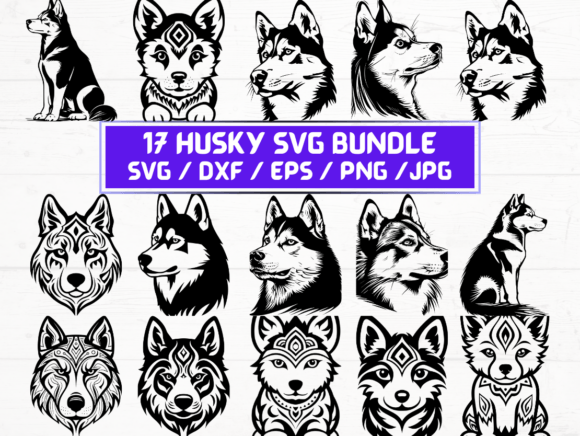
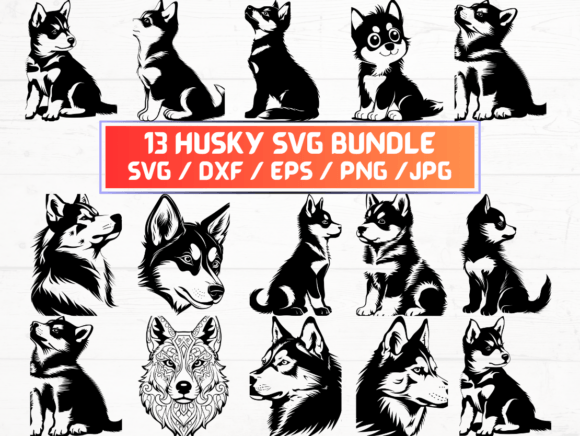
When I opened the Husky SVG download—13 SVG, PNG, DXF, JPG, and EPS files—I didn’t just scan for formats. I asked: *Will this hold up on a sweatshirt cuff? Will it read clearly on a baby onesie? Does it feel handmade—or like a generic clipart afterthought?* The answer, right away, is yes—it feels intentional. The silhouette is clean but expressive: rounded ears, soft muzzle curve, and confident posture. It’s not overly detailed (no tiny whiskers or individual fur strands), which is smart. That restraint makes Husky SVG work well as a machine embroidery design—not just a graphic. It leans into charm without sacrificing stitchability.
A Real Project Test: Embroidering a Linen Kitchen Towel
Last week, I used Husky SVG to embroider a set of linen tea towels for a local boutique’s holiday launch. Linen’s loose weave and slight slub can swallow fine detail, so I chose the medium-sized version (approx. 3.5" wide) and converted it to an embroidery file with balanced fill stitch density and subtle satin-stitch edging. On the towel, it landed perfectly—recognizable at a glance, warm but not cutesy, and sturdy enough to survive repeated washing. Customers loved how it looked both in person and in the boutique’s Instagram stories. That tells me Husky SVG isn’t just “crafts” filler—it’s a quiet branding asset. It adds personality without shouting.
Where Husky SVG Shines (and Where It Needs Care)
Husky SVG works especially well for:
- Custom apparel — Think crewneck sweatshirts, unisex tees, and relaxed-fit caps. Its bold outline reads cleanly even at modest sizes (3–4").
- Embroidered patches — Clean edges and minimal internal detail mean crisp cut-and-sew results, especially when backed with tear-away stabilizer.
- Baby embroidery — Gentle shape + no sharp angles = ideal for onesies, burp cloths, and nursery pillows. Parents respond to its approachable, non-gendered warmth.
- Tote bag design — Stitches evenly across canvas and cotton duck; holds presence without needing dense fill.
- Holiday embroidery & personalized gifts — Paired with simple monogram initials or a seasonal phrase (“Merry & Muddy”), it becomes a memorable handmade product.
But be thoughtful with placement and fabric:
- Avoid ultra-small hoop sizes (<2.5") unless you’re willing to simplify details manually—some inner curves tighten too much below that scale.
- Texture matters: On heavy terry cloth or thick fleece, use medium-cutaway stabilizer to prevent puckering around the husky’s ear contours.
- Stretchy fabric? Pre-stabilize with light iron-on backing before hooping—Husky SVG’s smooth lines don’t forgive distortion.
- Dark fabric demands contrast: Test thread colors in natural light. A charcoal husky on navy looks rich; the same on black can disappear unless you add a subtle white outline stitch.
- Curved surfaces (like caps) benefit from repositioning the design slightly lower on the front panel—its balanced weight keeps it from “sliding” visually.
What This Means for Your Craft Business
If you’re an Etsy seller or small shop owner, Husky SVG isn’t just another digital embroidery file—it’s a versatile design asset that supports multiple revenue streams. You can offer it as part of a “Winter Pet Lover” bundle (with matching paw prints and snowflakes), use it on ready-made embroidered pillow covers, or license it for limited-run boutique merchandise—as long as your commercial terms allow. Its clean vector foundation (SVG/EPS) means easy resizing for printable mockups or social media previews. And because it’s not overloaded with micro-details, customers rarely ask for revisions—saving time on custom orders.
That said, Husky SVG doesn’t replace thoughtful execution. I still test every new embroidery file on scrap fabric first—especially checking how the nose and eye areas stitch out. On thin cotton poplin, I dropped stitch density by 15% and added a lightweight tear-away stabilizer. On a textured organic cotton apron? I went up to medium cut-away and slowed my machine speed. These aren’t flaws in Husky SVG—they’re reminders that great embroidery lives in the dialogue between design, fabric, and technique.
Design Notes Every Embroiderer Should Check
Before stitching your first Husky SVG project:
- Confirm licensing — Since this is a Graphics product, verify whether resale of finished embroidered items or digital redistribution is permitted.
- Test in black and white — Print a grayscale version to assess value contrast, especially if planning dark-fabric applications.
- Inspect corners and curves — Zoom in on the SVG file: are anchor points smooth? Are there stray nodes that could cause jagged stitches?
- Match stabilizer to fabric weight — Husky SVG’s moderate density means it won’t overwhelm lightweight fabrics—but it also won’t hide poor stabilization.
- Compare light/dark backgrounds — Try the PNG version over white and charcoal swatches in your design software. Does the shape retain clarity?
- Review thread color pairings — A warm taupe husky on oatmeal linen reads artisanal; neon orange on black reads party—not always the vibe your brand needs.
Final Thought: It’s Not Just a Husky—It’s a Vibe Anchor
Husky SVG lands where many embroidery files miss the mark: it balances simplicity with character. It doesn’t try to be everything—a mascot, a logo, a cartoon, a fine art print. Instead, it’s confidently *one thing*: a friendly, stitch-ready emblem for makers who value clarity, warmth, and real-world performance. Whether you’re embroidering a holiday gift for a dog-loving friend or building a cohesive line of pet-themed kitchen goods, Husky SVG earns its place in your digital embroidery file library—not because it’s flashy, but because it works, quietly and well.