Haunted House SVG: A Graphic Designer’s Take on Themed Visuals
The First Impression: Mood and Style
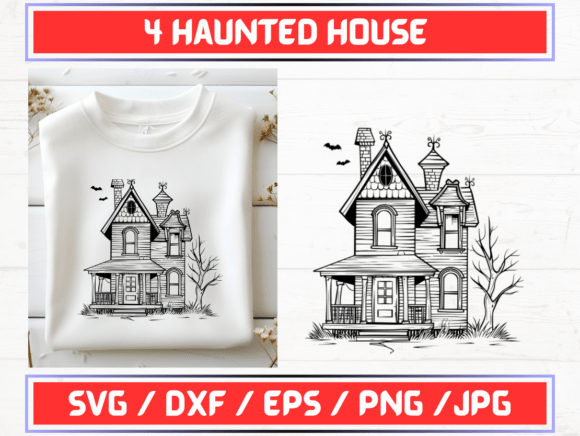
The moment I opened the Haunted House SVG, I was immediately drawn to its eerie yet inviting aesthetic. The design exudes a classic horror vibe with intricate details that suggest a handcrafted, vintage feel. It’s not just a simple illustration—it’s a narrative element, capable of evoking nostalgia and mystery. This makes it ideal for projects that require a touch of whimsy or a dark, atmospheric tone.
Client Project Context: Seasonal Campaign for a Handmade Brand
I imagine using Haunted House SVG for a seasonal campaign for a small handmade brand selling spooky-themed products. The client is looking to create a cohesive visual identity around Halloween, targeting both online and in-store audiences. The asset fits perfectly as a central graphic, offering a consistent theme across all marketing materials, from social media posts to product packaging.
Design Asset Performance in Real Projects
Haunted House SVG is versatile enough to work in a variety of design scenarios. As a graphic design asset, it can serve as a key visual element in logo design, brand identity, or even as part of a larger branding strategy. Its detailed nature makes it suitable for packaging design, where subtle accents can elevate the overall look without overwhelming the main content.
It also shines in social media graphics, especially when used as a hero image or background. The asset’s complexity allows for creative layering, making it a great choice for Canva templates or Cricut projects. For printable designs, the 300 dpi quality ensures crisp output, whether it's for stickers, t-shirt design, or mugs.
Where It Works Best
Haunted House SVG performs exceptionally well in large layout areas, such as product mockups and campaign visuals. It adds depth and character without being too intrusive. In editorial design, it can act as a decorative accent, enhancing the mood without overpowering the text.
Its versatility extends to web design and digital ads, where it can be scaled and layered to fit various screen sizes and formats. When placed on real mockups, it feels like a natural part of the design ecosystem, contributing to a more polished final result.
Where to Use with Caution
However, there are situations where Haunted House SVG might not be the best fit. In minimalist branding or professional corporate materials, its intricate details could clash with the clean, modern aesthetic. Similarly, in crowded layouts or complex backgrounds, it may become visually overwhelming.
Additionally, when used in low-contrast designs or small sizes, the asset may lose its impact. Designers should always test the asset at different scales and in various color schemes to ensure it maintains its visual integrity.
Readability and Visual Hierarchy
One of the most important considerations when using Haunted House SVG is how it affects readability and visual hierarchy. While the asset is visually rich, it can sometimes compete with text or other design elements. To maintain clarity, it should be used strategically—either as a background or in areas where the text is minimal.
For marketing visuals, this means placing the asset in a way that supports rather than distracts from the core message. It should enhance the emotional appeal and audience engagement without overshadowing the content.
Designer Notes for Commercial Use
Before using Haunted House SVG commercially, there are several practical steps to consider. First, test it in black and white to ensure it retains its visual interest and doesn’t become confusing or unclear. Check contrast on both light and dark backgrounds to confirm it remains legible in different contexts.
Preview the asset at small and large sizes to see how it behaves under different conditions. Place it on real mockups to gauge its impact in a real-world setting. Test print quality to ensure it holds up in physical formats, especially if it’s intended for print-on-demand or sublimation design.
Review the file formats included in the ZIP folder. The presence of SVG, PNG, JPG, EPS, and DXF files offers flexibility, but designers should inspect PNG transparency and check SVG editability if they plan to make custom modifications. Confirm the commercial license before using it for a client or business project.
Conclusion: A Useful Creative Asset
Haunted House SVG is more than just an illustration—it’s a creative design tool that can bring a unique visual voice to a wide range of projects. Whether it’s for brand identity, social media graphics, or printable wall art, it has the potential to enhance the visual hierarchy and professionalism of a design project.
As a graphic designer, I would recommend Haunted House SVG to those working on themed campaigns, seasonal promotions, or any project that benefits from a nostalgic, atmospheric feel. With careful use and attention to detail, it can become a valuable addition to any design assets library.