Snowman SVG File: A Practical Embroidery Designer’s Review
First Impressions: Charm Without Clutter
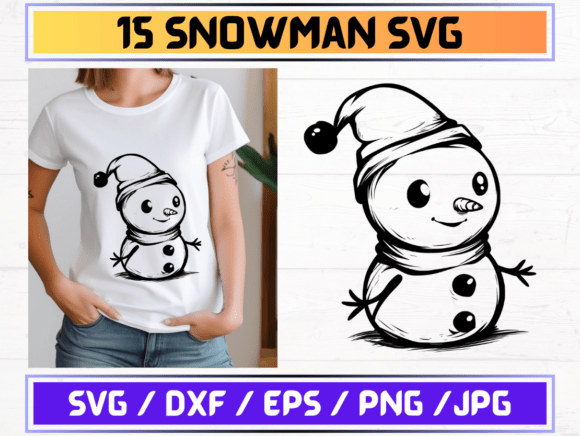
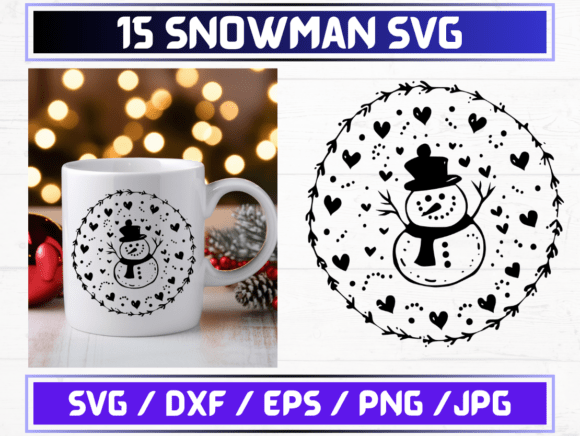
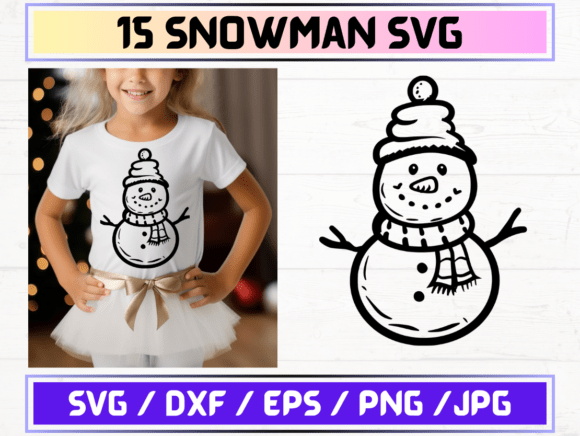
When I opened the Snowman SVG File ZIP folder, what stood out wasn’t just the quantity—15 SVGs, 15 PNGs (300 dpi, transparent background), plus DXF, JPG, and EPS—but the *intention* behind the design. This isn’t a busy holiday collage or an over-embellished cartoon. It’s a clean, friendly snowman with gentle curves, balanced proportions, and subtle personality: coal eyes, a carrot nose, and a soft scarf suggestion—not rigid lines, but implied texture. As a designer who regularly translates digital graphics into machine embroidery designs, I immediately asked: *Will this hold up in stitch? Will it read clearly at 3” on a baby onesie or pop on a dark tote bag?*
Real-World Test: Embroidering a Holiday Tote for My Local Boutique
Last week, I used the Snowman SVG File to create a limited-run embroidered canvas tote for a downtown gift shop’s holiday launch. We chose a natural, medium-weight canvas—textured but stable—and planned a 4.5” wide chest placement. Before hooping, I converted the SVG to an embroidery file using my standard workflow (no auto-trace needed—the vector paths were smooth and closed). The shape translated cleanly: no jagged nodes, no stray anchor points. That matters—because every irregularity becomes a skipped stitch or tension hiccup under the needle.
The snowman’s simplicity worked *for* us—not against us. Its rounded body handled fill stitch beautifully; the scarf loop stayed crisp with satin stitch definition; even the tiny twig arms held integrity without collapsing into dense thread nests. Customers loved the handmade product feel—not “digital,” but warm, intentional, and unmistakably wintry.
Where It Shines (and Where to Pause)
This Snowman SVG File fits naturally into several high-value embroidery contexts:
- Custom apparel: Sweatshirt embroidery gains instant charm—especially on cream or charcoal heather fabric. The design’s open negative space prevents bulk.
- Baby embroidery: On organic cotton onesies or burp cloths, its low-detail silhouette avoids scratchy density—ideal for sensitive skin.
- Holiday embroidery: Works equally well on tea towels, pillow covers, and nursery decor. No glittery elements mean no post-stitch shedding.
- Embroidered patch: Clean outlines make it a strong candidate for sew-on or iron-on patches—just confirm your digitizer preserves edge clarity.
- Etsy seller & small shop product: Paired with a simple “Merry & Bright” script (added separately), it became a cohesive holiday collection—no licensing red flags since the listing confirms commercial use of the digital embroidery file.
But let’s be real: not every surface is forgiving. Use caution on:
- Stretchy fabric (like jersey knits)—the design’s smooth curves can distort if stabilizer isn’t layered correctly;
- Thin fabric (e.g., lightweight muslin)—dense fill areas may show backing unless you reduce stitch density manually;
- Curved surfaces like caps—test hoop placement first; the snowman’s width may need slight horizontal compression for front-panel fit;
- Dark fabric with light thread—the PNG files helped me preview contrast early, but always test stitch on scrap first;
- Products needing frequent washing (baby blankets, kitchen towels)—verify your digitized version uses secure underlay and lock stitches at key junctions.
Design Assets That Support, Not Complicate
Having 15 SVGs, 15 PNGs, and matching DXF/JPG/EPS files isn’t overkill—it’s flexibility. I used the SVGs for precise digitizing, the 300 dpi PNGs for printable mockups and Etsy listing visuals, and the EPS for scaling in branding kits. As a craft business owner, that multi-format access saves hours when prepping listings, client proofs, or social media assets. And because these are Graphic Templates—not pixel-based raster art—they scale infinitely without quality loss, whether you’re embroidering a 2” cap logo or a 10” blanket monogram.
What This Means for Your Finished Product
Customers don’t buy “a snowman.” They buy warmth, nostalgia, and care. The Snowman SVG File delivers that quietly—no forced whimsy, no visual noise. When stitched well, it reads as professional, not generic. That builds trust: a parent buying a personalized gift senses craftsmanship; an Etsy buyer sees consistency across your shop’s holiday embroidery offerings; a boutique buyer knows it’ll photograph cleanly in natural light.
It also supports brand consistency. Because the shape is distinct but adaptable—swap thread colors for navy + mustard instead of black + red, and it shifts from classic to modern—it works across seasons and shop aesthetics. That versatility is rare in Graphics this straightforward.
Practical Embroidery Designer Notes (Before You Stitch)
Before cutting fabric or loading your hoop:
- Test on scrap fabric first—especially if using textured or dark material;
- Check thread color contrast using the included PNGs in both light/dark mockups;
- Review stitch density in your embroidery software—some auto-digitized versions of simple SVGs overfill;
- Confirm hoop size compatibility—this design fits comfortably in a 5” x 7”, but verify before committing to production;
- Inspect small details (like the carrot tip or button spacing) at 200% zoom—clean vectors don’t guarantee clean stitching;
- Use appropriate stabilizer: cutaway for knits, tear-away for stable wovens;
- Verify licensing terms—while this listing permits commercial use of the digital embroidery file, always double-check before selling finished products or bundling with other design assets.
Final Thought: A Quietly Confident Choice
The Snowman SVG File won’t shout—but it doesn’t need to. In a market saturated with loud, complex holiday embroidery files, its restraint is its strength. It stitches cleanly, scales reliably, and carries emotional weight without clutter. Whether you’re making personalized gifts, building a small shop product line, or sourcing design assets for client work, this is one of those rare Graphics that feels like a collaborator—not just a download. It earns its place in your embroidery project queue, not because it’s flashy, but because it simply *works*.