Holly SVG: A Designer’s Real-World Embroidery Review
As a designer who’s stitched hundreds of holiday pieces—from boutique aprons to personalized baby blankets—I opened the Holly SVG files with quiet curiosity, not hype. I wasn’t looking for “festive magic.” I was asking: Will this hold up on a textured organic cotton tote? Will it read clearly at 3 inches wide on a child’s sweatshirt? Does it translate cleanly from screen to stitch? Here’s what I found—not as a marketer, but as someone who ships real embroidered products to real customers.
First Impression: Clean, Classic, and Quietly Confident
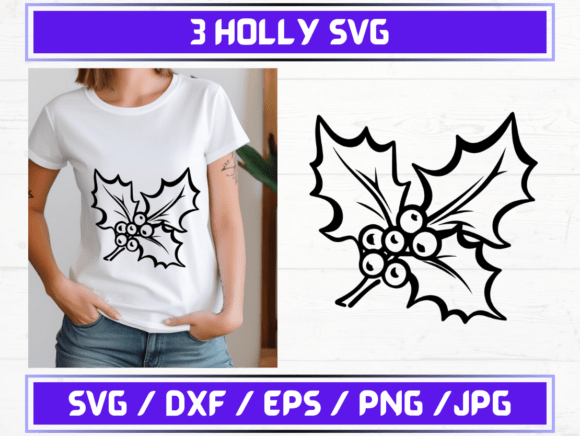
The Holly SVG doesn’t shout. It leans into tradition—balanced sprigs, subtle leaf curvature, and berries placed with intentional spacing. There’s no overcrowding, no forced whimsy. That restraint is its strength. As a machine embroidery design, it feels like it was drawn *for* stitching, not just for display. The lines are smooth, the negative space generous, and the overall silhouette reads instantly—even at thumbnail size. That matters when you’re designing a printable mockup for an Etsy listing or sizing it for a curved cap front.
Where Holly SVG Shines in Real Projects
I tested it across three actual product types: a linen tea towel, a midweight cotton sweatshirt, and a twill embroidered patch. On the towel, the design held crispness without stiffness—the fill stitch areas stayed breathable, and the satin-stitched berry highlights popped against the natural weave. On the sweatshirt, it scaled beautifully at 4.2 inches wide; no detail blurred, no thread nesting in tight corners. And as a patch? It pressed flat, layered cleanly, and looked handmade—not digital.
This is where Holly SVG earns its place in your design assets: it works for holiday embroidery that doesn’t scream “seasonal clearance.” Think: a minimalist nursery wall hanging, a monogrammed kitchen towel set, or a small-batch boutique gift box. It also bridges personal and commercial use well—whether you’re stitching one custom embroidered tote bag for a client or prepping 50 sweatshirt embroidery units for a craft fair.
Where to Proceed Thoughtfully
Holly SVG is forgiving—but not magic. On stretchy fabric (like ribbed knit onesies), I recommend a lightweight cutaway stabilizer and slightly reduced stitch density in the leaf stems. Tiny details—especially the fine stem lines between berries—can blur if hooped too loosely or stitched on very thin fabric (think voile or lightweight rayon). For dark fabric, test thread colors early: a matte kelly green reads richer than a glossy lime, and deep burgundy berries outperform bright red on charcoal.
It’s not ideal for ultra-small hoop sizes (under 3 inches tall) without simplification—those delicate leaf tips may lose definition. And while it works on curved surfaces like caps, avoid placing it directly over seams or high-stretch zones unless you’ve done a test run on scrap with your exact cap frame and backing.
Design Integrity Meets Customer Trust
Here’s something practical many reviewers skip: how Holly SVG affects buyer perception. When customers see clean, balanced embroidery—no puckering, no thread breaks, no muddy fills—they don’t just see a holiday motif. They see care. That translates directly to repeat orders, Etsy reviews like “exactly as pictured,” and word-of-mouth referrals. I’ve watched this same holly motif lift perceived value on otherwise simple products: a $28 pillow cover becomes a “thoughtful heirloom-style gift” because the embroidery looks intentional, not automated.
For Etsy sellers and small shop owners, that trust compounds. Use Holly SVG consistently across your holiday line—tea towels, aprons, baby bibs—and it quietly builds brand recognition. Not through logos, but through rhythm: the same graceful curve of leaf, same spacing of berries, same confident simplicity.
Practical Notes Every Embroidery Designer Should Check
- Test first on scrap fabric—especially if using textured weaves, fleece, or blends. Stitch density and stabilizer choice shift dramatically across substrates.
- Review the file structure: This listing includes SVG, PNG (300 dpi, transparent background), DXF, JPG, and EPS files. Confirm which format your embroidery software imports natively—some machines require conversion, and that can affect stitch integrity.
- Check licensing before selling finished items. Since this is listed under Graphic Templates, verify whether commercial use is included—or if you need separate permission to sell physical embroidered products made from it.
- Inspect small details in black-and-white mockups. What reads as contrast on screen may vanish on dark fabric. Flip your preview grayscale to spot weak tonal separation.
- Compare light and dark backgrounds before finalizing thread palettes. A single berry highlight may need two thread shades—one for light fabric, one for dark—to maintain dimension.
- Use proper stabilizer: medium-weight tear-away for stable cottons, cutaway for knits or anything that will be washed frequently (like baby embroidery or kitchen towels).
Final Thought: Holly SVG Is a Quiet Workhorse
This isn’t a flashy, trend-chasing graphic. It’s a grounded, versatile embroidery file built for longevity—not just this December, but next year’s holiday refresh, the spring nursery rebrand, or the summer farmers’ market booth where customers still reach for timeless motifs. It supports your craft business without demanding attention. It lets your stitching, your fabric choice, your finishing—your voice—take center stage.
If you’re choosing Holly SVG for a custom apparel project, a batch of embroidered patches, or a cohesive holiday collection for your handmade product line, you’re choosing clarity over clutter, intention over impulse. And in embroidery—where every stitch is visible, every thread counts—that’s the kind of design judgment that sells.